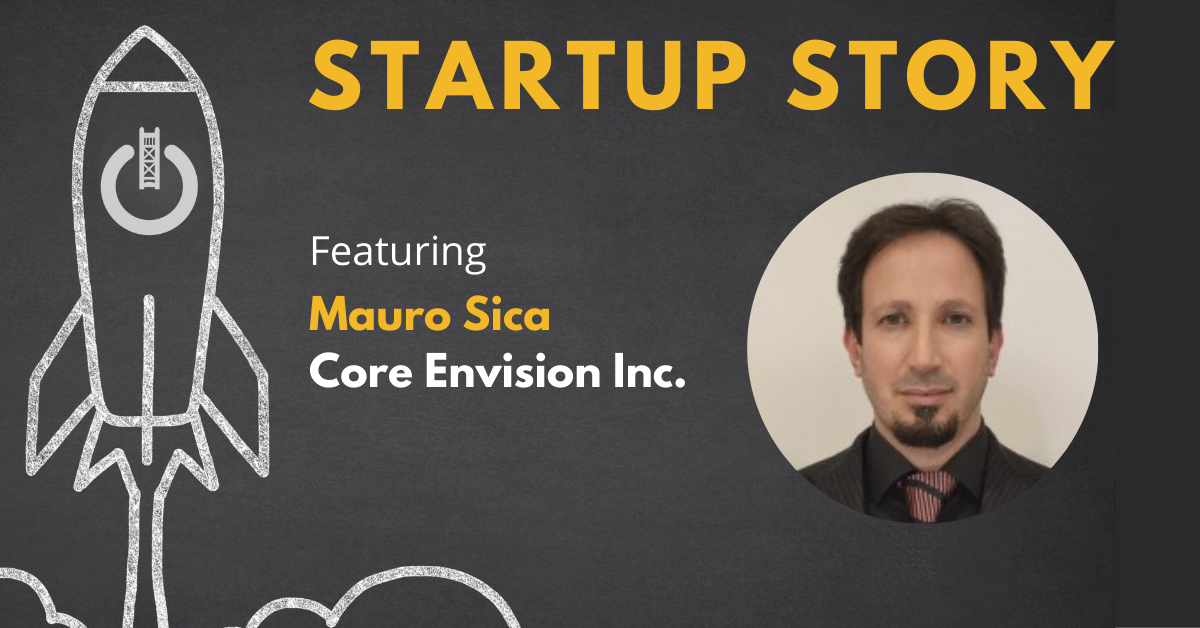
From Architecture to AI: Solving Construction’s Translation Problem
Sacramento’s startup ecosystem continues to highlight founders tackling difficult problems in traditional industries. At the CleanStart Rising Star Showcase, Folsom-based Core Envision was selected as the winner in the Sustainability category of the Accelerate California competition sponsored by CalOSBA, earning a $50,000 award.
Core Envision is addressing a hidden inefficiency in residential construction: the gap between blueprints and what happens on the jobsite. Industry studies show that only about 37 percent of on-site framing time is truly productive, while roughly 7 percent of framing lumber is wasted due to blueprint confusion, delays, and rework.
Founded by architect, construction manager, and entrepreneur Mauro Sica, Core Envision uses software and precision layout tapes to translate complex plans into clear instructions for framing crews, helping builders work faster with less waste.
In this Startup Story, Mauro reflects on the experiences that led him to build Core Envision, the challenges of turning construction insights into technology, and the lessons he has learned as a founder tackling inefficiencies in a traditional industry.
From Design to Job Site Reality
Can you share a bit about your personal journey and what first drew you to architecture and the construction industry?
Mauro: I originally studied software, but my love for beauty and creativity led me to pivot into architecture. I was captivated by the artistic side of buildings. However, that perspective shifted the moment I stepped onto a construction site. I saw firsthand how difficult it was to execute the architectural vision in the real world. My role quickly shifted from just designing beauty to solving the complex, gritty problems required to get it built.
Looking back on your career, what experiences or frustrations in construction made you realize the system itself needed to change?
Mauro: My experience spanning Architecture, Construction Management, and prefabrication revealed a critical bottleneck: extracting information from blueprints to the real world. This translation process was consistently causing unnecessary waste and errors. Builders are fantastic at execution, but lots of them struggle to read drawings that we, as architects and engineers, often make more complicated than they need to be.
The Decision to Build Core Envision
What was the moment when you decided to stop trying to improve existing processes and instead build something entirely new with Core Envision?
Mauro: The defining moment happened on a complex project where I stepped in to help on-site, physically marking the layout from my own drawings onto the components. I realized that even for me—the person who designed it—the process was tedious and error-prone. That frustration sparked the idea. However, knowing the industry is resistant to drastic change, I decided not to force a new construction method. Instead, I focused on building a tool that solved that specific ‘translation’ pain without disrupting the way builders already work.
As a founder coming from architecture and construction, what was the biggest learning curve when building a technology-driven company?
Mauro: The biggest learning curve was undoubtedly the complexity of shipping reliable software. Coming from architecture and construction, I was used to a world that is visual and three-dimensional—even in the design stage, you can see the objects in CAD. Software is different; it requires a different systematic approach. Code errors are hidden deep in the logic, invisible until the moment the system breaks.
Building from Lived Experience
How did your background and lived experience shape the way you approached problem solving and product development at Core Envision?
Mauro: My time on job sites taught me the builder’s pragmatic mindset, while working across three continents proved that construction inefficiencies are global and systemic. Unlike many builders who must focus on immediate survival—paying rent and feeding families—I had the software and AI background, and the opportunity, to take a risk. I realized I was uniquely positioned to build the solution that the industry desperately needed but couldn’t pause to create itself. I also realized that building a residence and building a company can take years and require a similar strategic approach and long-term mindset, given the number of tasks and disciplines involved.
What were some of the early challenges you faced when validating your idea with builders and crews in the field?
Mauro: Most of the time, crews really welcomed our solution, but there was one notable exception that caused me deep frustration. I met a veteran builder, around 65, who prided himself on never using a nail gun, strictly sticking to his manual hammer. He viewed our solution as a threat to his craft rather than a tool to help him, spending the whole meeting trying to find faults. It made me ask: Why disrupt his world if he is happy doing things the hardest way possible? It taught me a valuable lesson: Core Envision is not for those who take pride in resisting change.
From Idea to Working Product
Can you walk us through how Core Envision evolved from an idea into a working solution that delivers real world results?
Mauro: The spark came from a builder who was also an investor in my previous company. He identified a gap that the industry had ignored: the precise positioning of hardware in foundation slabs. We built the first version of our tape to solve that specific pain point. From there, the evolution was natural—we realized the same logic could be applied to the rest of the framing. So, we expanded the solution to cover wall plates, headers and window openings, and we are currently working on the next generation to drive costs down even further.
Winning the Sustainability category at the Accelerate California competition was a major milestone. What did that recognition mean for you as a founder?
Mauro: Startup life is a marathon, and an award like this is like hearing a massive cheer from the crowd. It provided a crucial boost of confidence—not for my ego, but for the vision. I believe that ‘everything is possible’ as long as your intention is to do good and you are confident in your success. That recognition validated that we are on the right path and fueled us to keep pushing through the challenges.
Advice for Founders in Traditional Industries
What advice would you give to founders who see inefficiencies in traditional industries but are unsure how to start tackling them?
Mauro: I’m not sure I’m qualified to give advice yet, but here are my two cents: Don’t fall into the trap of ‘improving’ things by simply shifting costs or adding complexity (such as prefabrication of walls in a factory with massive overhead). Also, trying to reinvent the wheel with a solution that feels alien to your customer is incredibly risky—it requires far more capital and time to educate the market. It is much more effective to solve the inefficiency in a way that feels familiar to the people doing the work. Do not force customers to relearn their trade just to use your product.
As you look ahead, what excites you most about the future of Core Envision and your role as a founder building long term impact?
Mauro: I am driven by a tangible goal: I want Core Envision to cut enough waste from the construction process to make housing 10% more affordable and attainable. I want to prove that sustainability doesn’t have to come at a premium. I’m excited to build ‘green tech’ that actually costs less than traditional building methods, and hopefully, that success will inspire other entrepreneurs to tackle systemic problems with a similar practical approach.
About Core Envision Inc.
Core Envision Inc. is a Folsom, California-based construction technology company using AI to convert traditional blueprints into interactive 2D and 3D models. Its software generates precision layout tapes that are printed and applied directly to lumber, guiding framing crews in real time.
By eliminating manual measurements and reducing translation errors, Core Envision accelerates framing, reduces material waste from 5 to 7 percent to less than 1 percent, and helps builders lower overall project costs. The company serves production builders, framing contractors, and lumber distributors with tools designed to integrate seamlessly into existing workflows.
Wrap Up
Core Envision reflects a disciplined approach to innovation in a traditional industry. Rather than forcing disruption, Mauro Sica focused on removing a specific friction point that builders encounter daily. For early stage founders, this story highlights an important principle: meaningful change often comes not from reinventing an industry overnight, but from solving one persistent problem with clarity, practicality, and patience.
Interested in more Startup Stories? Check them out here.