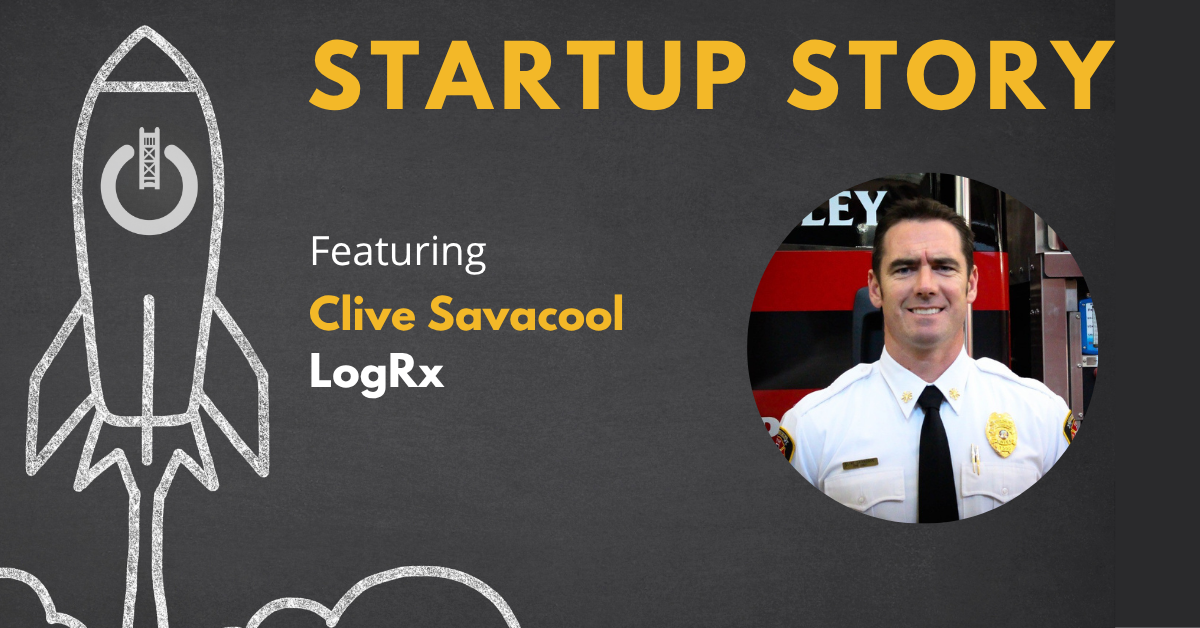
For many founders, the best business ideas come from firsthand experience. For Clive Savacool, Founder and CEO of LogRx, that experience came from decades in emergency services. After spending years as a paramedic and Fire Chief, he saw a critical problem hiding in plain sight: controlled substances like Fentanyl and Morphine were still being tracked with paper logs and manual audits.
What started as an observation became a mission to improve accountability, compliance, and operational readiness for organizations handling controlled substances. Today, LogRx is used internationally across EMS, fire departments, veterinary organizations, ski patrol teams, wilderness medicine programs, and more. The company has also earned industry recognition, including EMS World’s Innovation Award and EMS Today’s Hot Product Award. In 2024, LogRx added another milestone by taking first place at Pitch Elk Grove.
In this Startup Story, Clive shares how he identified the opportunity behind LogRx, lessons learned while building the company, and advice for founders solving problems within their own industries.
Identifying a Long-Standing Industry Problem
Before founding LogRx, you spent years in the fire service and as a paramedic. What experiences led you to realize there was a problem worth solving?
Clive: In the fire service, change often happens slowly. There is an old joke “The fire service has 200-years of tradition, unimpeded by progress.” Many processes continue simply because that’s how they’ve always been done, not necessarily because they’re the best way to do them.
When it came to tracking controlled substances, there wasn’t a single defining moment that revealed the problem. It was more a growing awareness over years of experience that there had to be a better way. Agencies were relying on paper logs and manual audits to meet DEA requirements. Everyone accepted it as normal, but from my perspective it was an area where technology could dramatically improve efficiency, compliance, and importantly the overall culture of accountability. As a Fire Chief, I found my staff was only going to take something as serious as I did; and if I gave them paper logs to track lethal drugs, that set a dangerous tone.
What was the moment when you decided to stop thinking about the problem and start building a solution?
Clive: It was actually after I had left the fire service and was working on another startup focused on firefighter health and safety. After talking with Fire Chiefs still in the industry, I learned that the same practices were still in place. Around the same time, I took a job as a fire chief myself and saw firsthand that the same problems that had always existed, were still there. Having the experience of working on another startup (which was being acquired by a large software company in Indiana), I was able to take some of that knowledge and utilize it to start building a solution.
Lessons Learned as a Founder
Looking back, is there a lesson from your entrepreneurial journey that you wish you had learned sooner?
Clive: I wish I had learned earlier that building a great product is only part of the equation. Many founders believe that if they create something valuable, customers will automatically find it. The reality is that sales, marketing, good customer service, and relationship-building are every bit as important as the product itself.
I want to emphasize good customer service as well; we have branded ourselves with our high level of customer service to the point we’re on a first name bases with most of our customers. This is one of the biggest factors we have a near zero churn rate.
I also learned that progress rarely happens as quickly as you expect. What feels like a setback today is often just part of the process. Persistence, adaptability, and a willingness to listen to customers have been far more important than having all the answers from the beginning.
For those unfamiliar with LogRx, what does the platform do, and why is it important for EMS providers and other organizations?
Clive: LogRx is a software platform that helps organizations securely track controlled substances, such as Fentanyl and Morphine. We provide real-time accountability, chain-of-custody tracking, inventory management, compliance reporting, and auditing tools.
For ambulance providers, fire departments, medical clinics, ski patrols, veterinary organizations, and others who handle controlled substances, accountability is strictly regulated by the DEA. Our platform helps organizations reduce administrative burden, improve compliance, identify discrepancies quickly, and ensure that medications and critical resources are available when they’re needed most.
Expanding Beyond EMS
LogRx is now used internationally and has expanded beyond EMS into industries like veterinary medicine and wilderness medicine. How did that growth happen?
Clive: Much of our growth happened organically. Organizations outside of EMS began reaching out because they faced the same challenges with controlled substance accountability but lacked a purpose-built solution for their industries.
One early example was California Fish and Wildlife. When they approached us, we realized that what we had built for EMS was also an excellent fit for their operations with only minor modifications. We discovered that features such as GPS-based activity tracking were even more valuable in their environment than they were in traditional EMS settings.
That experience taught us that while industries may look very different on the surface, many share the same fundamental need for accountability, compliance, and operational visibility.
Your technology is helping support innovations like prehospital blood programs. What excites you most about the impact LogRx is having on patient care and public safety?
Clive: One of the things I’m most proud of is that our team comes from healthcare and emergency services backgrounds. We didn’t start LogRx because we thought it would make us rich. We started it because we believed we could solve real problems for people working in the field.
What’s exciting is seeing how technology can directly support better patient care and operational readiness. Whether it’s helping agencies safely manage controlled substances, supporting prehospital blood programs, or ensuring critical supplies are available when needed, our software allows first responders and healthcare professionals to focus more on their mission and less on administrative processes.
Knowing that our work helps people do their jobs more effectively, and may ultimately contribute to better patient outcomes, is far more rewarding than any financial milestone.
The Value of Startup Competitions
You won first place at Pitch Elk Grove. How did opportunities like that help your company grow, and what advice would you give founders considering startup competitions?
Clive: Being a startup founder can be a lonely journey. Most startups fail, and even fewer become sustainably profitable. Competitions like Pitch Elk Grove provide something incredibly valuable: feedback, validation, and getting involved with the local startup community.
My background is primarily in fire and EMS, not software development or entrepreneurship. I understand the problems we’re solving, but I still have a tremendous amount to learn about building and scaling a business. Events like Pitch Elk Grove expose founders to new perspectives, experienced mentors, investors, and fellow entrepreneurs who challenge assumptions and help strengthen ideas.
My advice is simple: participate whenever you can. Even if you don’t win, the feedback, connections, and experience are often worth far more than the prize itself. Creating a company can be pretty lonely at times, especially early on, so taking part in the local startup events is almost like group therapy. And you always take away something positive.
What advice would you give to entrepreneurs who see a problem in their industry?
Clive: Start by listening. Research the problem thoroughly and talk to as many people as possible who experience it. Even if you’ve spent years in the industry, it’s easy to get trapped in your own perspective.
One of the best decisions we made was involving customers early. We built an initial version of LogRx and put it in front of pioneering agencies that were willing to provide honest feedback and be sympathetic to the fact that the product was a work in progress. Those conversations shaped the product far more than anything we could have done in isolation.
The most successful solutions aren’t built solely by founders; they’re built collaboratively with the people who will ultimately use them. The more time you spend listening, the better your product will become.
About LogRx
Founded by Clive Savacool after a career in emergency services, LogRx is a medication accountability platform designed to help organizations securely track controlled substances. The software combines mobile technology with cloud-based applications to simplify inventory management, narcotics tracking, auditing, compliance reporting, and chain-of-custody documentation.
Originally developed for EMS providers, LogRx is now used internationally by fire departments, veterinary organizations, ski patrol teams, wilderness medicine programs, and other agencies that require strict medication accountability. The company has been recognized with multiple industry awards and continues to expand its impact across healthcare and public safety sectors.
Wrap Up
Many successful startups begin with a founder who understands a problem better than anyone else. For Clive Savacool, years spent in emergency services revealed an opportunity to modernize a critical but often overlooked process. By combining industry expertise with customer feedback and a commitment to solving real-world challenges, he built a platform that now serves organizations around the world.
For entrepreneurs, the LogRx story offers an important reminder: listen closely to the people experiencing the problem, stay persistent through setbacks, and remember that building a great product is only one part of building a successful company. The relationships you develop with customers and the community around you may be just as important as the technology itself.
Interested in learning about more programs that support entrepreneurs? Join our newsletter here to stay updated on opportunities and resources.